The 9:30 Reservation Is a Love Language
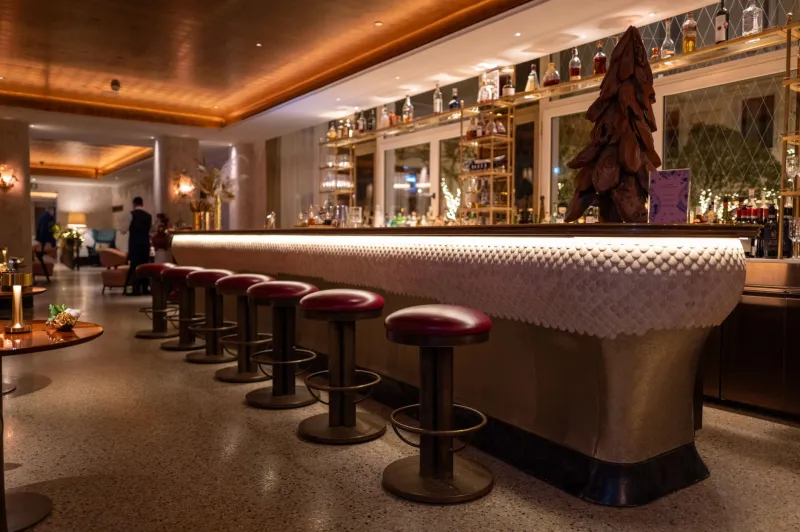
There's a specific sound a good restaurant makes around 9:15 on a Friday. The roar drops to a murmur. Servers stop sprinting between the pass and the back room. Someone finally turns the music up half a notch, because at last they can hear it. If you've ever lingered over a last glass of wine and watched that happen, you already know the argument I'm about to make.
The last seating is the best seating. And in a walkable American city, it's the closest thing to a guaranteed good night out that a couple can book.
A first seating is a transaction. A last seating is a visit.
Early reservations come with an invisible clock. The table is promised to someone else at 8:15. The kitchen is still in the weeds. Your server has eleven other things happening and a full night of them ahead. None of this is anyone's fault — it's just physics. A restaurant at 7 p.m. is a machine running at capacity.
A restaurant at 9:45 is a room. The pace slackens. Servers have time to steer you toward the dish the kitchen is proud of instead of the one that fires fastest. The bread arrives without being asked for. Somebody swings by to ask where you're headed afterward, and means it.
There's also the simple arithmetic of atmosphere. Late tables skew toward couples, small groups of friends, people celebrating quietly. The birthday-party energy of prime time drains out and something more conspiratorial takes its place. You end up talking about things you wouldn't have brought up over an appetizer at six.
New York: the city stops performing for you
Manhattan's early hours are a show. The late hours are the neighborhood. Take a 9:45 table at a small bistro in the West Village and you'll find the dining room perhaps two-thirds full, the bar seats finally free, and a waiter who has stopped reciting specials from memory and started actually recommending things.
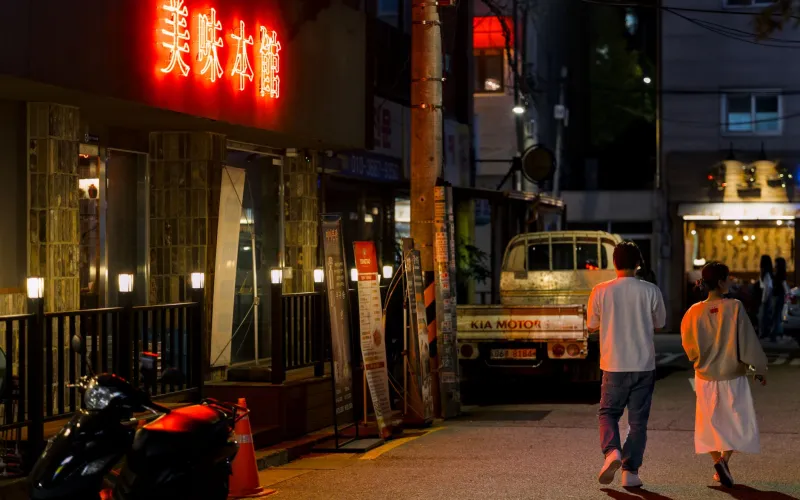
Lower Manhattan gets even better. In Chinatown and the Lower East Side, the late seating isn't a romantic novelty — it's just how the neighborhood eats. Noodle shops on Division Street stay loud and bright past midnight, and the walk back through streets that have emptied out feels like the city handed you the keys. The East Village at 11 p.m. on a Tuesday is a different, gentler place than the same blocks at 7:30.
Chicago: dinner, then the river, then one more
Chicago rewards late diners with a virtually free post-dinner itinerary. Book the final turn at a West Loop spot or a Logan Square wine bar, and by the time you push back from the table the Randolph Street crowds have thinned out and the riverwalk has gone quiet enough to hear the water.
If you're downtown, walk south along the river to the lake and let the bridges do the work. If you're further out, the Blue Line at 11 p.m. is its own kind of date — half-empty cars, a carful of people heading home from a shift, and the whole city scrolling past above ground on the way back in. There's something quietly intimate about being out in a city that's winding down rather than ramping up.
San Francisco: fog is a better dining companion after ten
San Francisco's late-night scene is smaller than New York's or Chicago's, which is precisely the appeal. A 9:45 table in North Beach means the tourist crush on Columbus has thinned, the fog has rolled in over the Transamerica Pyramid, and the walk up Telegraph Hill to Coit Tower afterward belongs almost entirely to you.
The Mission works the same way. Late tables at the neighborhood spots along Valencia and 18th give you a meal that ends near midnight, which is exactly when the sidewalks get good — couples leaning in doorways, a taqueria glowing on the corner, the whole neighborhood running at a human scale. Chinatown after 10 p.m. is another underrated option: quieter, steamier, and generally happy to seat you.
How to actually get the last table
A few things worth knowing before you start clicking around.
Call the restaurant. Booking apps often show the last available slot as 8:30 or 9:00 even when the kitchen is open until 11. A two-minute phone call — "do you have anything at the last seating?" — works far more often than it should. Ask for "the final turn" or "the last table" and you'll usually get an honest answer.
Check when the kitchen actually closes. A 9:30 reservation at a place that stops taking orders at 9:45 is not the relaxing evening you're picturing. Look for kitchens that run an hour or more past their last booking.
Ask about the bar. Most restaurants hold back counter and bar seats for walk-ins. A late bar seat at a place with a good bartender can be better than the dining room anyway, because you get a front-row view of the whole wind-down.
Book two to three weeks out, not two months. Late tables are the last thing to fill, so they're often still open long after prime time is gone. It also means you can be flexible about which night you go.
Order with the clock in mind. Late in the night, the smart move is fewer, better dishes: something from the raw bar, a pasta, a shared main, dessert you actually want. Then stay for the second coffee.
The walk home is half the date
Here's the part that no reservation system accounts for. When you eat at 9:30 in a walkable city, you leave the restaurant at 11:30 into streets that are cool, quiet, and lit low. The crowds are gone. The shop windows are still glowing. You have nowhere to be.
That walk — unplanned, unhurried, a little bit yours — is the whole reason to book late. The reservation just gets you out the door.