The Scenic Route Is the Point: Eight U.S. Downtowns Made for the Walk Back to Your Room

There is a particular moment after dinner when the night can go one of two ways. One person pulls out a phone, taps the rideshare app, and the date compresses into a seven-minute backseat ride with a driver who wants to talk about parking. Or you look at each other, decide the hotel is only a mile away, and take the long way. The second option is almost always better. A walk back to the room is not transportation. It is the part where the conversation loosens, where you notice the city without a reservation, where the evening actually settles in.
We are not anti-car. We are pro-detour. In these eight U.S. downtowns, the walk from dinner to your hotel is not a chore to be optimized. It is the main event. Pick a restaurant within a mile or so of where you are staying, ignore the most direct route, and let the city do the rest.
Charleston, South Carolina: From the Battery to the French Quarter
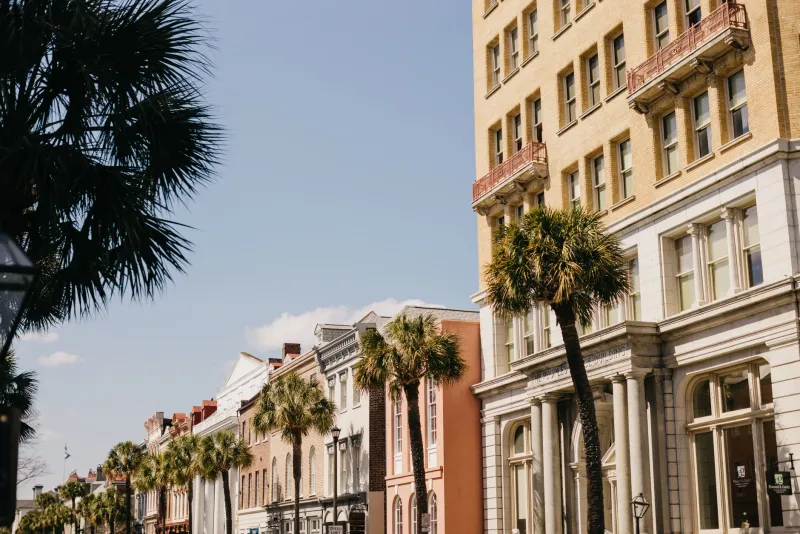
Charleston is built for the after-dinner amble. Start near East Bay Street, then drift south along Waterfront Park, where the Pineapple Fountain is lit and the harbor air smells like salt and river. From there, cut inland through the French Quarter on quiet streets like Church or Legare. The cobblestones are uneven, the houses are close to the sidewalk, and the bakery windows still glow even after the day's last biscuits have been sold. You are not walking to see anything in particular. You are walking because every block looks like a stage set for the conversation you are already having.
San Antonio, Texas: The River Walk After the Tour Boats Dock
Most people treat the River Walk as a place to eat, not a place to wander. That is a mistake after dark. Once the tour boats have thinned out, the water turns into a ribbon of reflected lights, and the stone stairways and arched bridges feel almost secret. Start with dinner near the water, then walk north or south without checking the map. Climb up to street level near Main Plaza for a quieter stretch, then come back down. If a pan dulce window is still open, stop. The point is not efficiency. The point is the extra twenty minutes you did not plan.
Portland, Maine: Old Port by Brick and Buoy
Portland's Old Port is compact enough to cross in fifteen minutes and interesting enough to stretch into an hour. Start on Fore Street, then drop down to Commercial Street and the working waterfront, where the fishing boats knock against the docks and the air smells like low tide. Loop back up through Exchange Street, past brick storefronts and small galleries. In colder months, the bakery windows fog up from the inside. In warmer months, people spill onto the sidewalks. Either way, the walk back to your hotel feels less like a route and more like a slow exhale.
Providence, Rhode Island: Riverwalk Lights and Benefit Street
Providence has one of the most underrated evening walks in New England. Leave dinner downtown and follow the Providence Riverwalk, where pedestrian bridges cross the water and the lights double themselves on the surface. Then climb College Hill toward Benefit Street, a stretch of old houses and quiet sidewalks that feels miles removed from the city below. If you happen to be in town during WaterFire, the whole river becomes a date. If not, the walk still works. The hill is steep enough to feel like an accomplishment and short enough to justify dessert.
Santa Fe, New Mexico: Adobe Walls and Farolitos
Santa Fe after dinner is all warm edges and long shadows. Start at the Plaza, then wander toward Palace Avenue or down side lanes where adobe walls hold the day's heat and farolitos line the rooftops in season. The streets are quiet in a way that makes you lower your voice without meaning to. A bakery window here and there glows against the dark, and the smell of piñon smoke hangs in the air. This is not a city for speed. Walk slowly, take the block that looks slightly wrong, and let the hotel wait.
Milwaukee, Wisconsin: Third Ward to the RiverWalk
Milwaukee's Third Ward and RiverWalk make a natural loop for couples who want a walk with texture. Start in the Third Ward, where brick warehouses have turned into restaurants and galleries, then follow the river where lit bridges cross and the water catches the city's reflection. In winter, the cold makes the walk feel like a shared secret. In summer, the patios are loud and the sidewalks are full. Either way, the route back to your hotel has enough turns to keep the evening from ending too neatly.
San Diego, California: Little Italy to the Embarcadero
San Diego can be a car city if you let it, but downtown rewards walking. Start in Little Italy, where the sidewalks are busy and the smell of garlic follows you for blocks. Then head toward the Embarcadero, where the harbor lights stretch out and the boats knock softly against the docks. Loop back through the Gaslamp if you want noise, or stay near the water if you want quiet. A late-night churro stand is not a detour. It is a necessary part of the route.
Annapolis, Maryland: City Dock and the Brick Sidewalks
Annapolis is small enough that the walk back to the hotel can be as long as you want it to be. Start on Main Street, then head to City Dock, where the water laps at the seawall and the boats creak in their slips. Take the side streets behind the Naval Academy walls, where the brick sidewalks are uneven and the houses are old enough to make you wonder who lived there before. The bakery windows are dark by then, but the streetlights are not. The walk is the dessert.
The rule is simple: book a hotel within a mile of dinner, then ignore the most direct route. The long way home is not wasted time. It is the part of the night you will actually remember.